Regional guide
Places to go in Wisconsin
Wisconsin is 65,000 square miles of two Great Lakes coasts, 15,000 inland lakes and a northwoods forest the size of a small country. Nobody sees it in a week. These five travel regions are how locals divide it up — and how you should plan.
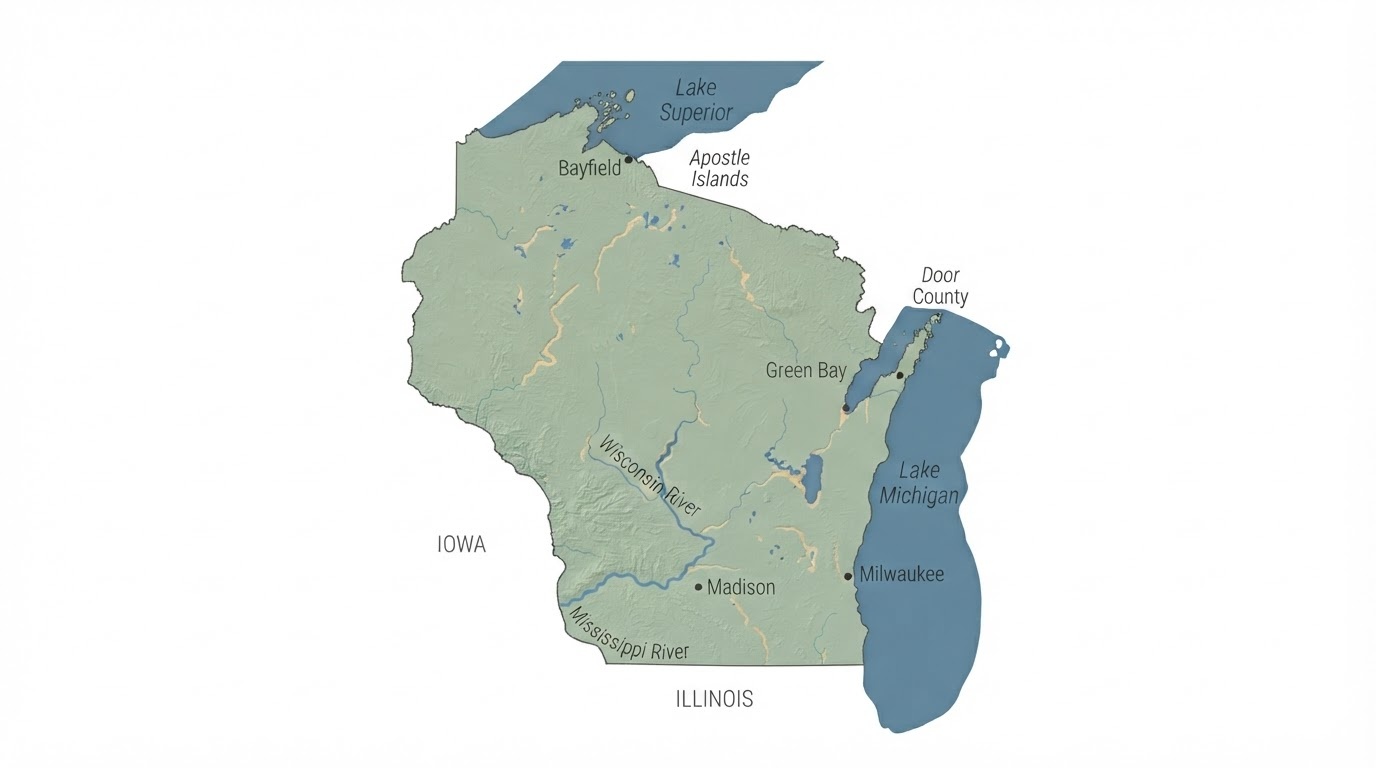
How the state actually divides
Tourism boards publish dozens of "trails" and "corridors". For planning purposes, ignore most of them. Wisconsin's travel geography comes down to distance from water and elevation:
- Southeast — Lake Michigan. Milwaukee, Racine, Kenosha and the beaches between them. Urban, walkable, the easiest arrival point from Chicago.
- South central — the isthmus and the Dells. Madison between two lakes, then the Wisconsin River gorge 55 minutes north.
- Northeast — Green Bay and the Door Peninsula. Football, then 70 miles of limestone coastline pointing into Lake Michigan.
- Northwest — Lake Superior. Bayfield, the Apostle Islands and the orchards on the hills above them. The coldest, quietest, most dramatic corner.
- West — the Mississippi and the Driftless Area. La Crosse, Prairie du Chien, bluff roads that were never flattened by glaciers.
Most first trips combine two adjacent regions. Three or more regions in one week means you spend the holiday driving — the state is longer north-to-south than England is wide.
The regions in detail
Southeast: Milwaukee and the Lake Michigan shore
Milwaukee is the only Wisconsin city that behaves like a big city: a riverwalk, three distinct restaurant districts, an art museum that is a piece of sculpture in its own right, and a lakefront festival park that hosts a music festival bigger than most countries' national events. West of downtown, the city turns into the lake-country suburbs of Wauwatosa and Elm Grove; north, into the bluffs of Port Washington.
Stay two nights. One day for the lakefront and the Third Ward, one for a brewery and the Harley-Davidson Museum, then drive west to Madison.
South central: Madison and the Wisconsin Dells
Madison sits on an isthmus between Lake Mendota and Lake Monona, with the state Capitol at the centre and the university running down to the water. It is the most pleasant small city in the Midwest to walk around, and the Saturday farmers market on Capitol Square is the reason many people plan their trip around a weekend.
An hour north-west, the Wisconsin Dells is a different proposition entirely: a sandstone gorge turned into a resort town with more indoor waterpark space than anywhere on earth. Both can be done from one base if you do not mind driving.
Madison guide · Wisconsin Dells guide
Northeast: Green Bay and Door County
Green Bay is a working river city with a football team that functions as a civic religion. Lambeau Field tours run year-round and are worth it even for non-fans; the stadium district has rebuilt itself as Titletown, with a sledding hill in winter and a plaza in summer.
From Green Bay it is 45 minutes to Sturgeon Bay and then the whole length of the Door Peninsula: 70 miles of harbour villages, cherry orchards, five state parks and eleven historic lighthouses. This is Wisconsin's most-booked summer destination, and deservedly so.
Green Bay guide · Door County guide
Northwest: Apostle Islands and Bayfield
Lake Superior does not behave like a lake. At Bayfield you are on the edge of the largest freshwater body in the world by surface area, looking at an archipelago of 21 forested islands with sandstone sea caves cut into their shorelines. The mainland orchards above town produce some of the best apples in the Midwest, and the whole area empties out after the first week of October.
Apostle Islands and Bayfield guide
West: La Crosse and the Driftless Area
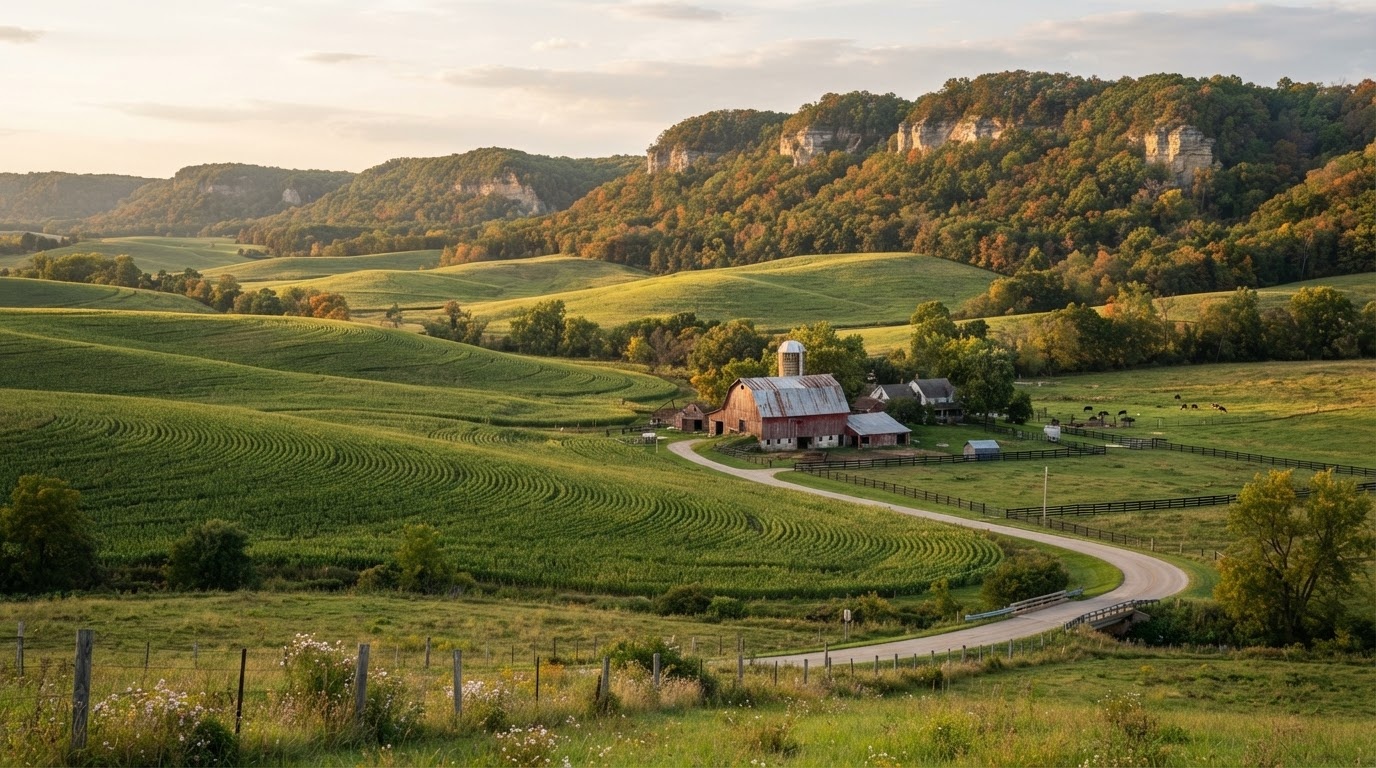
The last glaciation missed this corner of Wisconsin, which is why the hills are steep, the valleys are narrow and the roads switchback instead of running straight. La Crosse sits between 500-foot bluffs and the Mississippi, with a historic downtown, a paddlewheel boat and an Oktoberfest that draws six figures.
Realistic drive times
These are driving times in good conditions. Add 20–30% for a summer Friday, a football Saturday or any snow.
| From → To | Distance | Time |
|---|---|---|
| Chicago (O'Hare) → Milwaukee | 145 km / 90 mi | 1 h 40 |
| Milwaukee → Madison | 127 km / 79 mi | 1 h 25 |
| Madison → Wisconsin Dells | 88 km / 55 mi | 1 h 00 |
| Madison → Milwaukee Airport | 115 km / 71 mi | 1 h 15 |
| Milwaukee → Green Bay | 185 km / 115 mi | 1 h 55 |
| Green Bay → Sturgeon Bay (Door County) | 72 km / 45 mi | 0 h 50 |
| Green Bay → Bayfield | 400 km / 250 mi | 4 h 15 |
| Madison → Bayfield | 480 km / 300 mi | 5 h 00 |
| Madison → La Crosse | 225 km / 140 mi | 2 h 20 |
| Milwaukee → Lake Geneva | 84 km / 52 mi | 1 h 00 |
Towns worth a deliberate stop
Between the headline destinations are towns that reward an hour or a night. These are the ones we would build into a route rather than skip:
- Lake Geneva — a 21-mile shoreline path past Gilded Age estates, plus a mailboat that delivers post to the piers each summer morning.
- New Glarus — a Swiss-founded village in Green County with a brewery that does not distribute outside the state.
- Spring Green — Frank Lloyd Wright's Taliesin, plus a drive-in theatre and a river to canoe.
- Mineral Point — Cornish lead-mining town, now a craft and gallery centre on a very steep hill.
- Baileys Harbor and Ephraim — the quieter side of Door County, with a lake-side promenade and a fish boil that has run since the 1960s.
- Bayfield — brownstone streets climbing away from a harbour, ferries to Madeline Island, orchards inland.
- Stoughton — Norwegian heritage, a main street of Victorian shopfronts and a May festival that fills the town.
- Wausau — a genuinely good small-city art museum and a whitewater kayak course downtown.
Choosing a base
- One base, short trip: Madison or Milwaukee. Everything worth seeing is within a 20-minute walk or a 15-minute drive.
- Two bases, one week: Milwaukee then Door County, or Madison then Bayfield.
- Road trip: start Milwaukee, end Bayfield, and accept two long driving days.
Does region choice depend on season?
Yes, more than in most states. Door County and the Apostle Islands are summer and early-autumn destinations; by November most seasonal businesses on the peninsula close. Milwaukee and Madison are year-round cities with indoor programming that carries the winter. The Dells is busiest in January and February, when indoor waterparks sell out on school holidays, and again from June to August.
For month-by-month conditions, see Events and Seasons; for logistics, Plan Your Trip.
In pictures
A state of small towns and big water
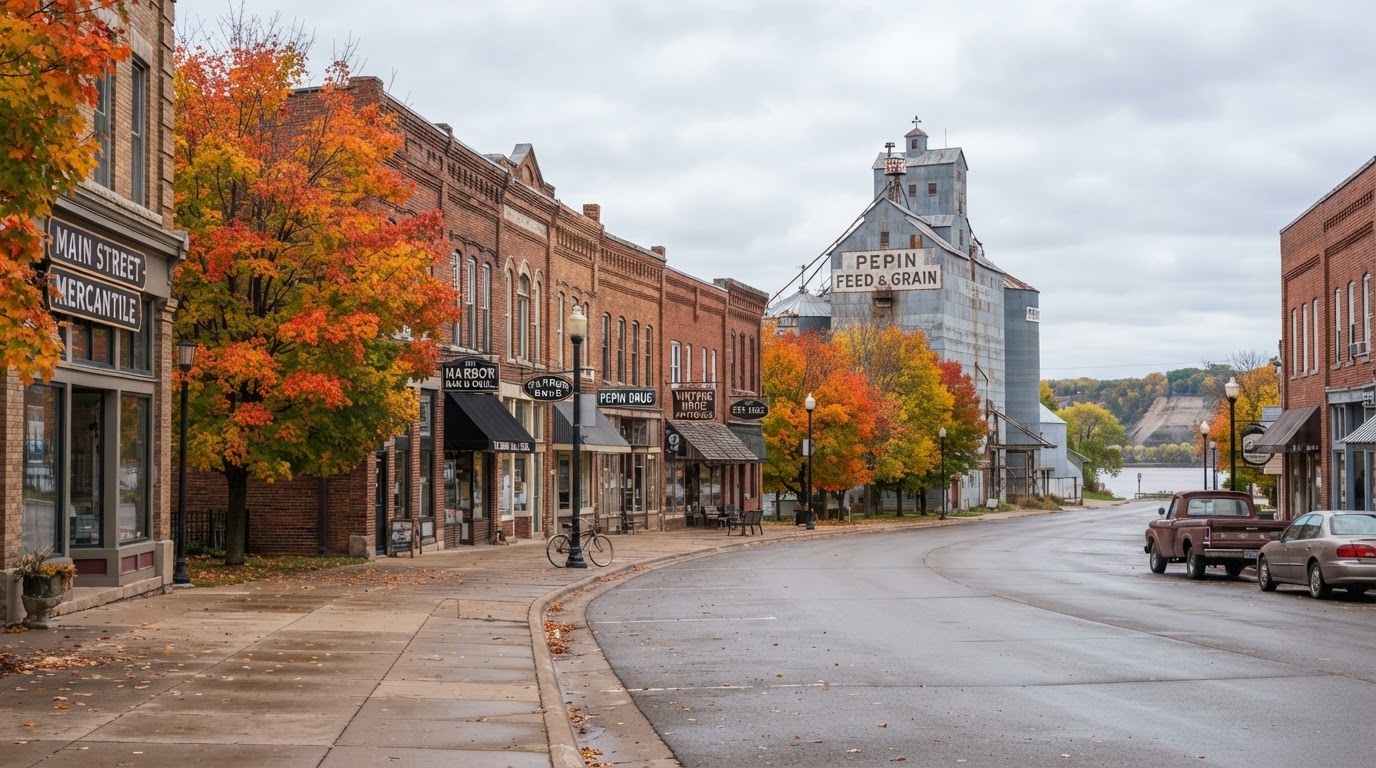
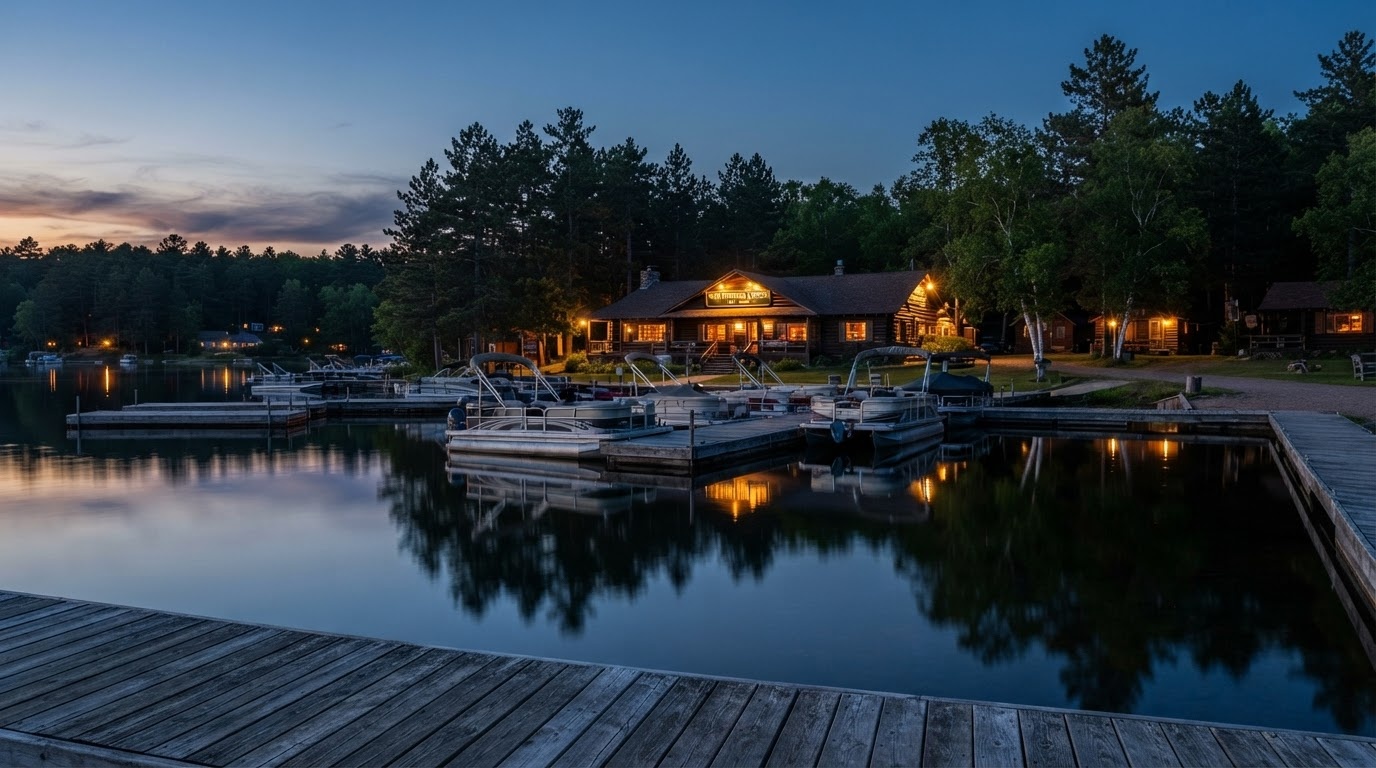
Three landscapes that define most Wisconsin road trips: the river main street, the unglaciated farmland of the west, and the lake resort town.
Next: what to do once you are there
Every region above has its own page. If you would rather start from a route, the itineraries hub has four tested plans with day-by-day timings.