South central Wisconsin
Wisconsin Dells
Two towns in one: a waterpark resort strip on the highway, and a 500-million-year-old sandstone gorge on the river. Families come for the first. Everyone should see the second.
The two Dells
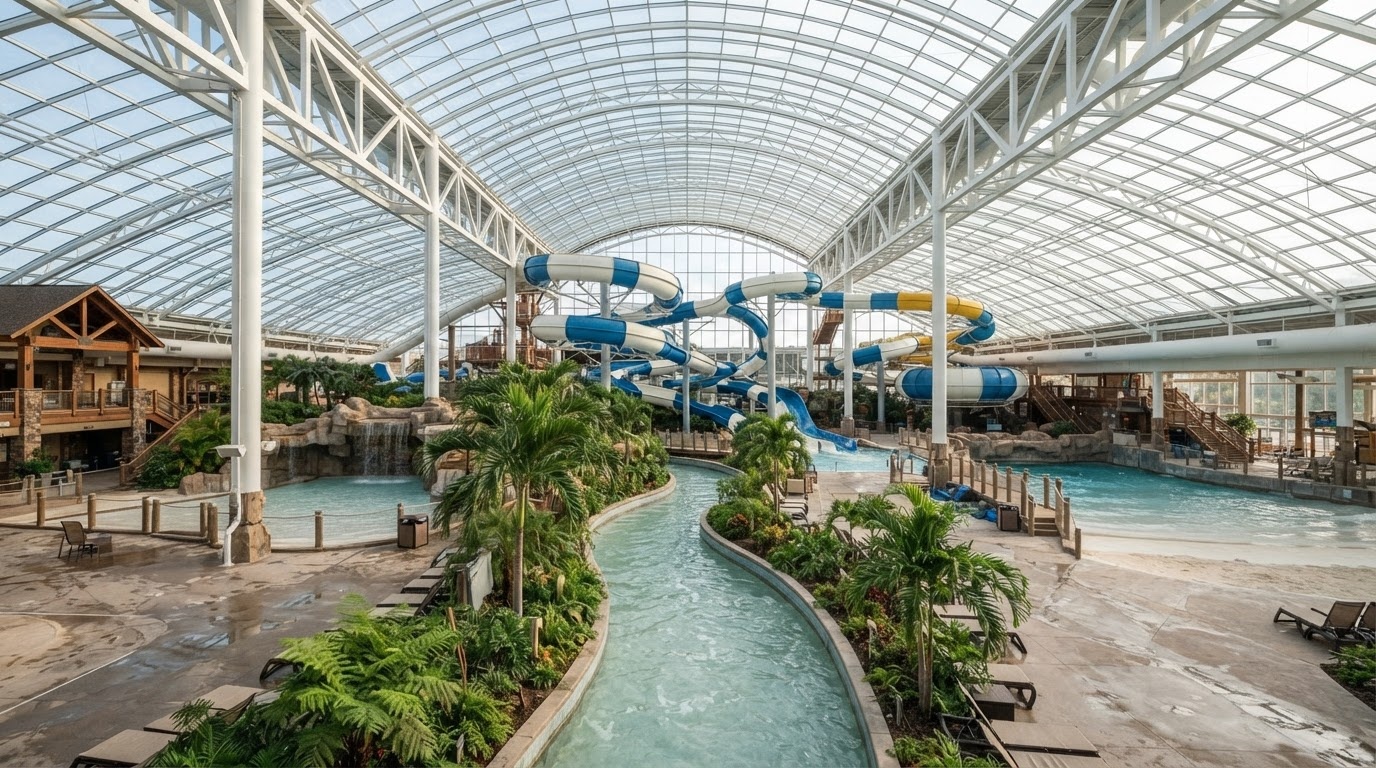
The city of Wisconsin Dells grew up around a five-kilometre stretch of the Wisconsin River where the water cuts through soft sandstone, leaving towers and walls up to 30 metres high. In the 19th century people came by steamboat to see it. In the 20th century the town added waterparks, go-kart tracks and dinner theatres, and by the 1990s it had more indoor waterpark space than anywhere else in the world.
Both versions still exist, about 3 km apart. The Upper Dells are protected and largely undeveloped. The resort strip is not. Plan for both and you will have a much better time than the people who only see the strip.
Waterparks, planned sensibly
Most of the big resorts sell day passes as well as rooms, so you do not have to sleep on site. A few practical points:
- Indoor parks matter most in winter. In January the temperature outside can be −15 °C while it is 30 °C under the glass roof. This is the reason the Dells has a year-round season at all.
- Midweek is dramatically cheaper. In term time, Tuesday to Thursday rates can be half the weekend rate.
- Height restrictions vary between parks and between slides. Check before you promise a child the big one.
- Lockers and towels are usually charged separately. Bring your own to save money.
- School holidays sell out weeks ahead — Christmas, spring break and the whole of July.
The gorge: what to actually do
An Upper Dells boat tour
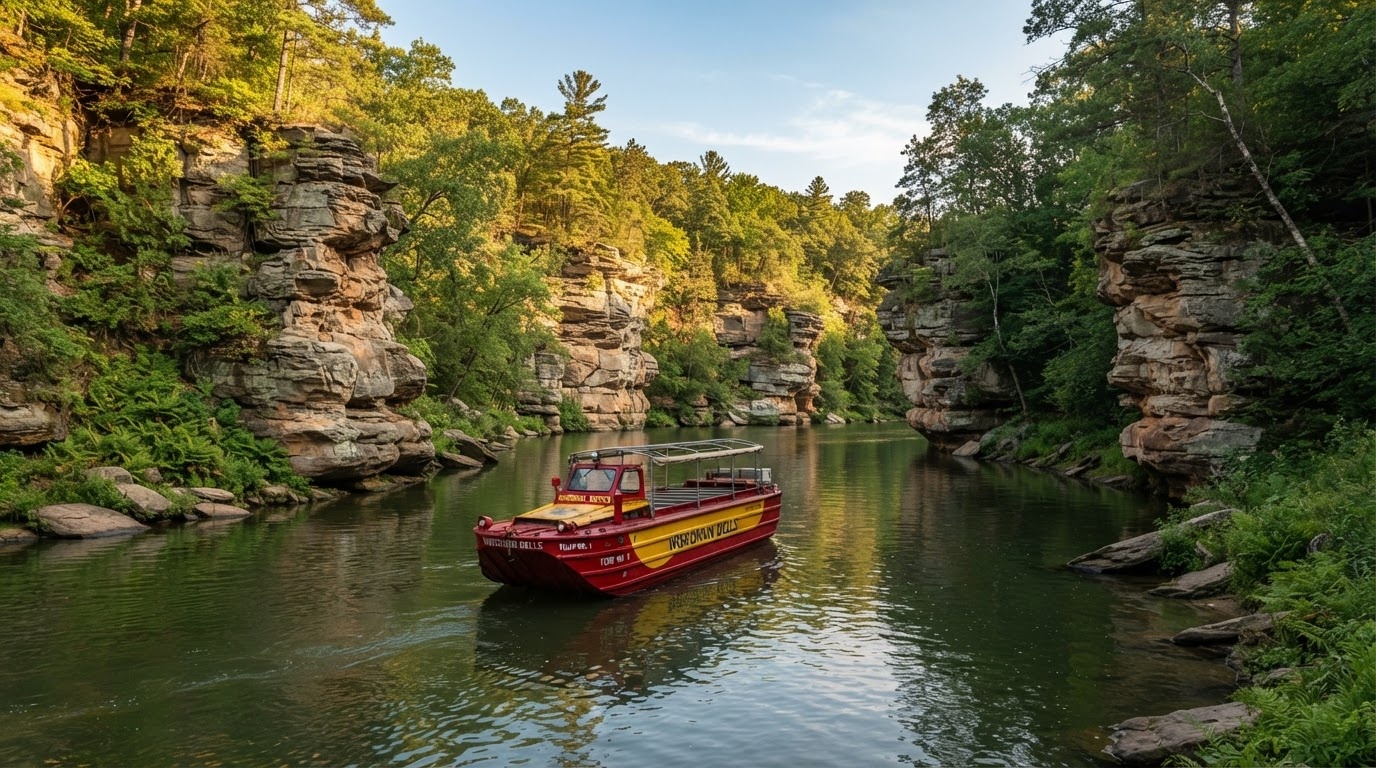
The classic. A two-hour cruise through the narrowest part of the gorge, with two shore landings — one at a rock formation called Stand Rock, where a dog famously jumps between columns for the tourists. It is a piece of 19th-century tourism that has survived intact, and the scenery is genuinely good.
A duck tour
Second World War amphibious vehicles that drive down the highway and straight into the river. It sounds like a gimmick and it is, but it is a good one, and children love it.
Witches Gulch
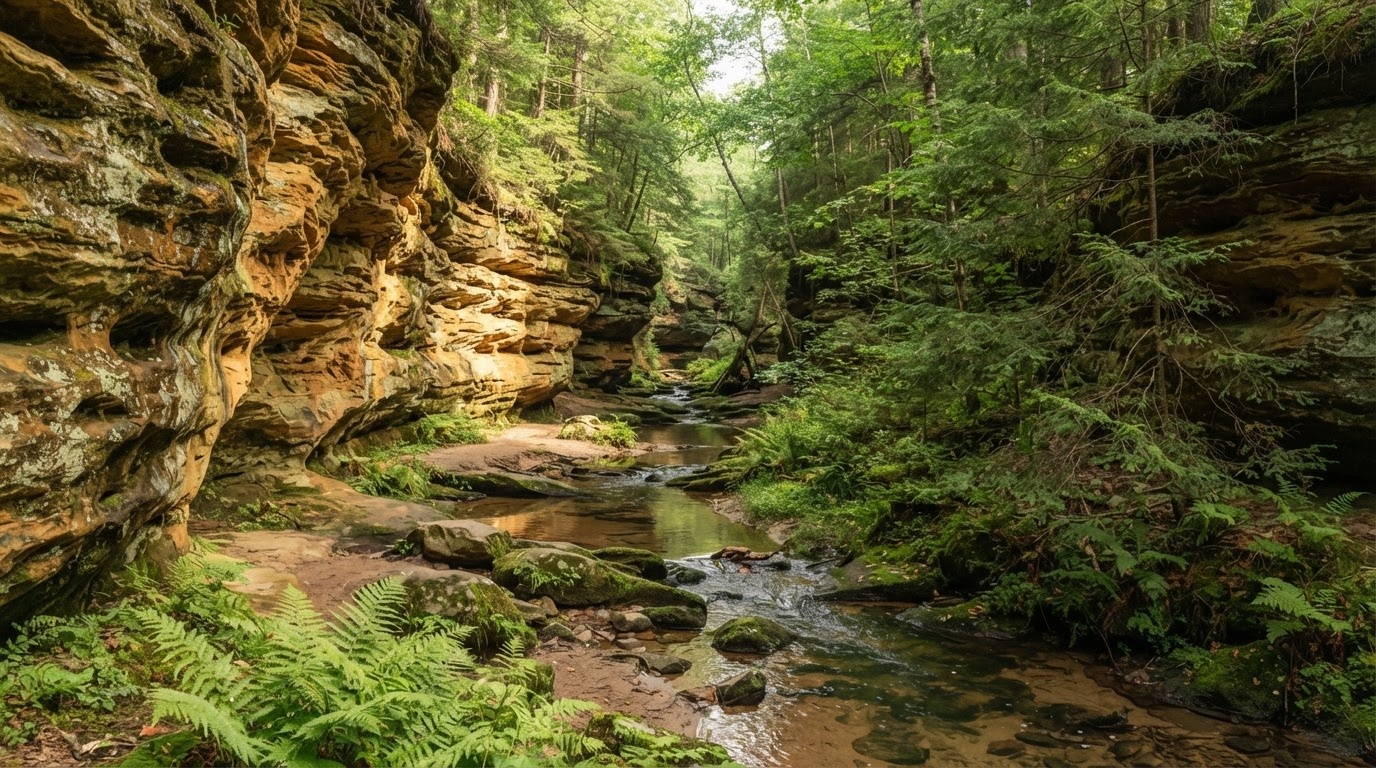
A narrow slot canyon with a boardwalk, reachable only on certain boat tours or by a long walk. Cool, damp and far quieter than anything on the strip.
A cave tour
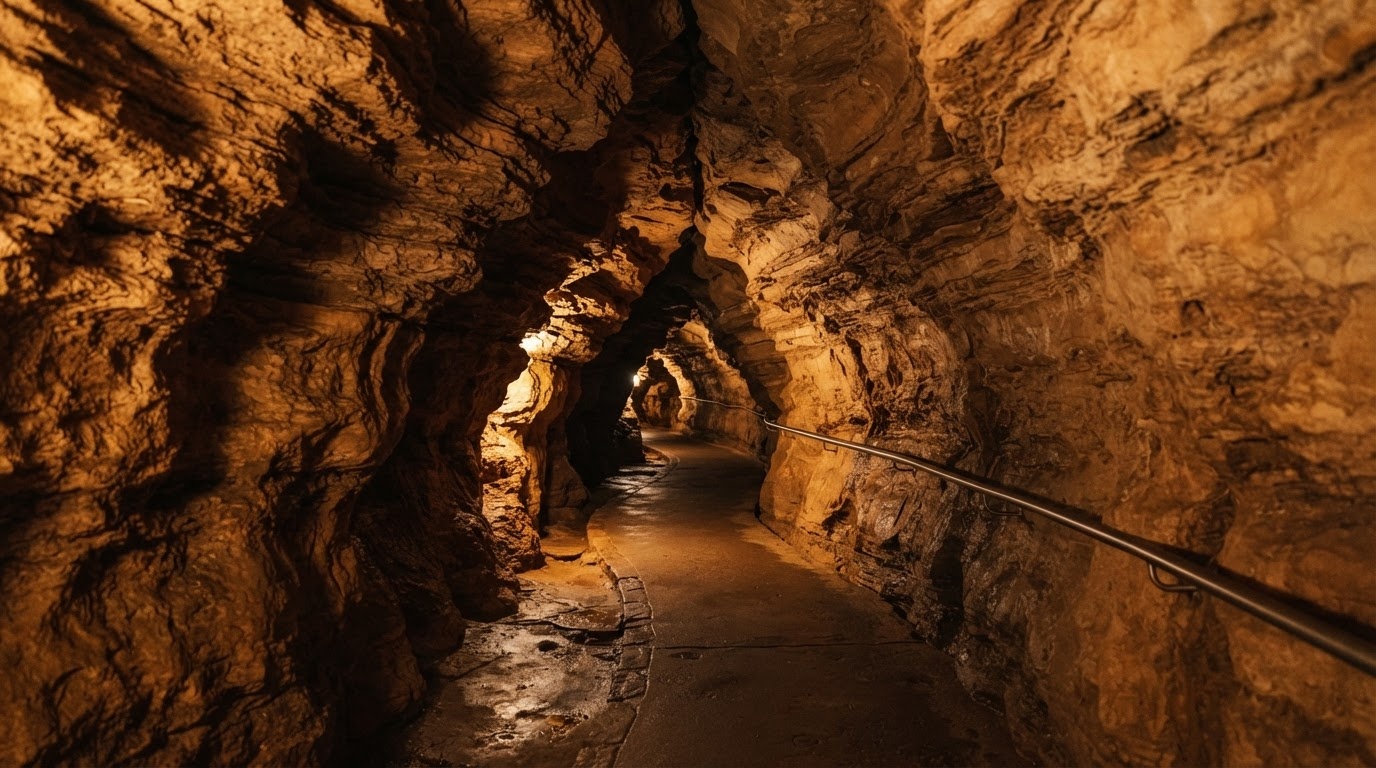
Several commercial caves in the area run hourly guided tours through sandstone passages. Good for a rainy day and for anyone who likes geology more than water slides.
Mirror Lake State Park
Five kilometres south of the strip: a clear, spring-fed lake with a beach, a 3 km hiking loop and a quiet campground. This is where locals go when they want a break from the resort strip, and it is the single best value in the area.
The quiet version of the Dells
- Stay in a cabin or at Mirror Lake rather than on the strip.
- Do the boat tour at 9am before the coaches arrive.
- Eat breakfast in downtown Dells rather than on the highway frontage.
- Walk the Riverwalk in the state natural area below the downtown bridge.
When to go
Winter (January–February) is the unique season here: indoor waterparks at their busiest and cheapest midweek rates. Summer (June–August) is outdoor waterpark and boat tour season, and the strip is loud and slow. September–October is the best compromise: everything still open, colour in the gorge, and half the crowd.
Getting there
- From Madison: 88 km north on I-90/94, about an hour.
- From Milwaukee: about 2 hours.
- From Chicago: about 3 hours.
- Nearest airport: Madison, an hour south.
Nearby worth adding
- Devil's Lake State Park — 20 minutes south, the best hiking in southern Wisconsin.
- Baraboo — the circus heritage town next door, with the Circus World museum.
- Portage — 25 minutes east, the canal town where the Fox and Wisconsin rivers nearly meet.
For families, the family fun guide covers what else works with children. For a route, see the Milwaukee and Madison itinerary.
In pictures
Sandstone, water and a canyon
Travelling with children?
The family guide covers waterpark strategy, cave tours, county fairs and which state parks work for short legs and short attention spans.