Universities
Wisconsin's universities, for visitors
Thirteen public universities, one flagship on a lake, and a handful of private colleges that shape the towns around them. This is the practical guide to visiting a campus — not applying to one.
How the system is organised
The University of Wisconsin System is a single public system of 13 four-year universities plus a network of two-year branch campuses. It is not one institution with satellites: each university has its own campus, its own sports teams and its own town. For a visitor, that means five campuses are genuinely worth building into a trip, and the rest are worth knowing exist.
UW–Madison: the one to plan around
The flagship sits on an isthmus between Lake Mendota and Lake Monona, with 378 hectares of campus running from the Capitol Square west to the lake shore. It is the reason Madison feels bigger than its 270,000 people, and the single best urban campus to wander in the Midwest.
The five things to actually do
- Memorial Union Terrace. Sunburst-patterned chairs on a pier over Lake Mendota, open to everyone, no purchase required. In summer there is live music most evenings; in October it is the best place in the city to watch the leaves turn. Arrive an hour before sunset to get a chair.
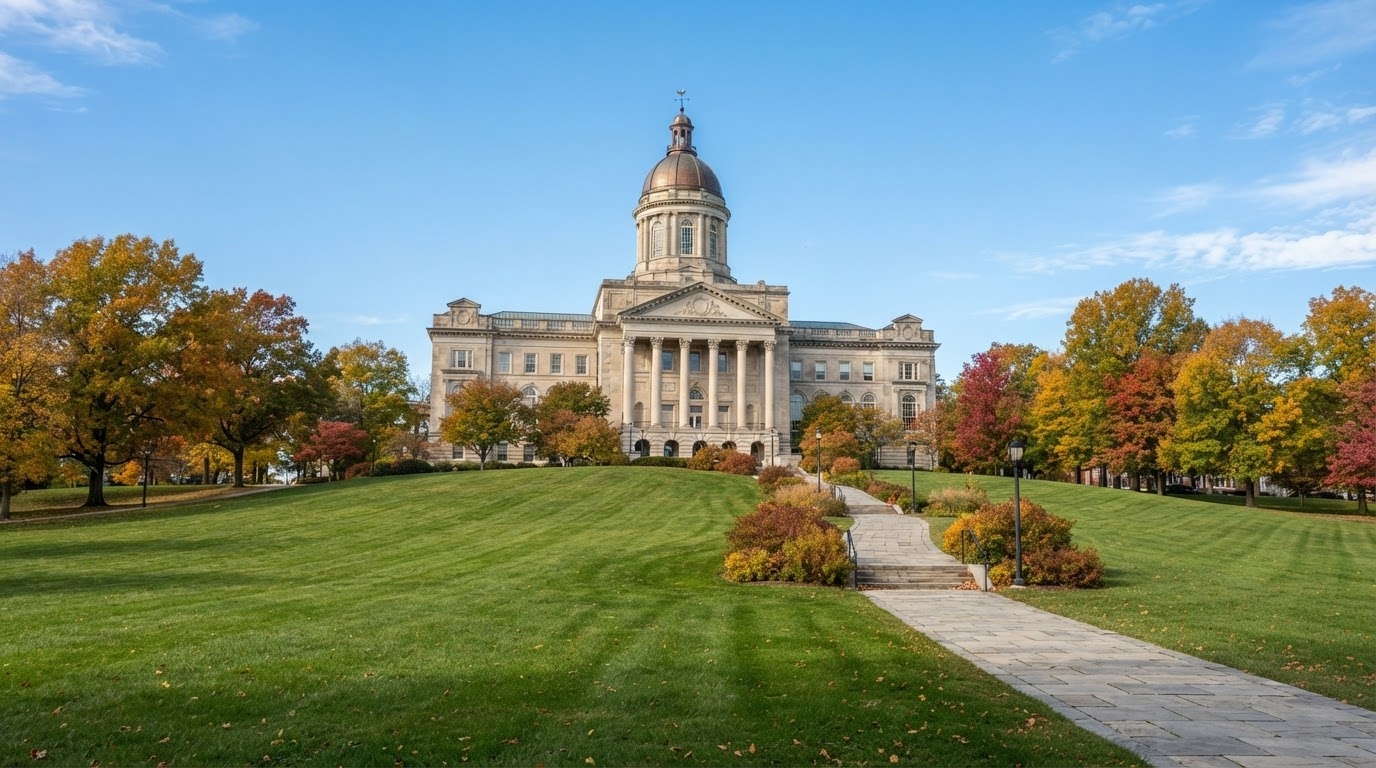
- Bascom Hill. The long grassy slope up to Bascom Hall's columned portico, lined with 19th-century limestone halls. It is a 10-minute walk from State Street and the most photographed view on campus.
- State Street. The mile of shops, cafes and cheap restaurants connecting campus to the Capitol. It is pedestrianised at the campus end and is the natural walking route between the two halves of the city.
- Camp Randall Stadium. A 76,000-seat bowl that becomes the fourth-largest city in Wisconsin on a football Saturday. The stadium tour runs outside the season; on game days, the pre-match "Jump Around" at the end of the third quarter is a genuine spectacle.
- Chazen Museum of Art and the Geology Museum. Both free, both on campus, both good for an hour when it rains. The Chazen's collection is stronger than a regional university museum has any right to be.
Campus tours and open access
Official guided tours for prospective students run most weekdays during term and must be booked through the university's admissions office. If you are a general visitor rather than a prospective student, you do not need a tour: the campus is public, the Union is open to all, and the lakeshore path around Lake Mendota is a 6 km walk anyone can do.
Some science and engineering buildings require a visitor pass. Memorial Union, the Chazen, the Wisconsin Historical Society and most libraries are open to the public.
Football Saturdays, honestly
- Hotel rates in Madison roughly double, and rooms sell out months ahead.
- Roads around Camp Randall close, and parking near campus is permit-only.
- Game tickets are hard to get; the Union and the bars on Regent Street are the alternative.
- If you are not going to the game, this is the best day of the year to visit the lakes and parks, which empty out.
Other campuses worth a detour
| Campus | City | Why a visitor goes |
|---|---|---|
| Marquette University | Milwaukee | A Jesuit campus immediately west of downtown, walkable from the Third Ward and the riverfront. Basketball games at the Fiserv Forum and a strong urban setting. |
| UW–Milwaukee | Milwaukee | On the east side, ten minutes from the lakefront. Its art and architecture school feeds the city's design scene; the campus film theatre and galleries are open to the public. |
| UW–Green Bay | Green Bay | A wooded, low-rise campus on the east side with a strong environmental science programme and easy access to the Fox River trail. |
| UW–La Crosse | La Crosse | Built into the bluff above the Mississippi, with the steepest campus setting in the state. The bluffs themselves are the attraction; the campus is a pleasant way up. |
| UW–Eau Claire | Eau Claire | A music-focused university in a river town that has rebuilt its downtown around a performing arts centre and a very good independent music scene. |
| UW–Stevens Point | Stevens Point | The natural resources college of the system, set among lakes and marshland forty minutes from the Dells — good base for a quiet outdoor week. |
| Lawrence University | Appleton | A private liberal arts college with a conservatory, on a bluff above the Fox River. The Fox Cities performing arts scene punches well above its size. |
| Beloit College | Beloit | An anthropology museum with world-class holdings, in a small city on the Illinois border. Free and genuinely surprising. |
The college-town experience
Wisconsin's university towns share a rhythm: a walkable main street, a coffee shop that has been there since the 1970s, a co-op grocery, a cheap noodle place, and a lake or river within sight of the library. Madison is the fullest version, but Eau Claire, La Crosse, Stevens Point and Appleton all have it in smaller doses.
If you are travelling with a teenager who is starting to think about universities, a spring campus-visit weekend is an efficient way to see three campuses: Madison on Friday, Milwaukee on Saturday, and Green Bay on the drive north.
Practical visiting notes
- Term dates matter. Campuses are liveliest from September to early December and late January to early May. In July they are quiet but the buildings and grounds are open.
- Parking. Visitor parking is usually in a specific ramp and costs by the hour. On Madison's campus, the Lake Street and Grainger Hall ramps are the most useful.
- Museums are free at most UW campuses. Several ask for a voluntary donation.
- Sporting events need tickets bought in advance; volleyball, hockey and wrestling are cheaper and easier than football or basketball.
- Accessibility. Older halls on the Madison and Beloit campuses have steep steps and limited lifts. The Unions and newer buildings are fully accessible; ask the campus accessibility office for a route.
For the city around the campus, see the Madison guide. For game weekends across the state, see Sports.
In pictures
Limestone, oak and lake water
A note on affiliation
Wisconsin.in is an independent guide. We are not affiliated with the University of Wisconsin System or any institution named on this page. Opening hours, tour schedules and access policies change — always confirm with the campus before travelling.