Southeast Wisconsin
Lake Geneva
A seven-mile lake ringed by Gilded Age estates, with a public footpath around the entire shoreline. The most convenient weekend escape from Chicago and Milwaukee.
The lake, and why it is unusual
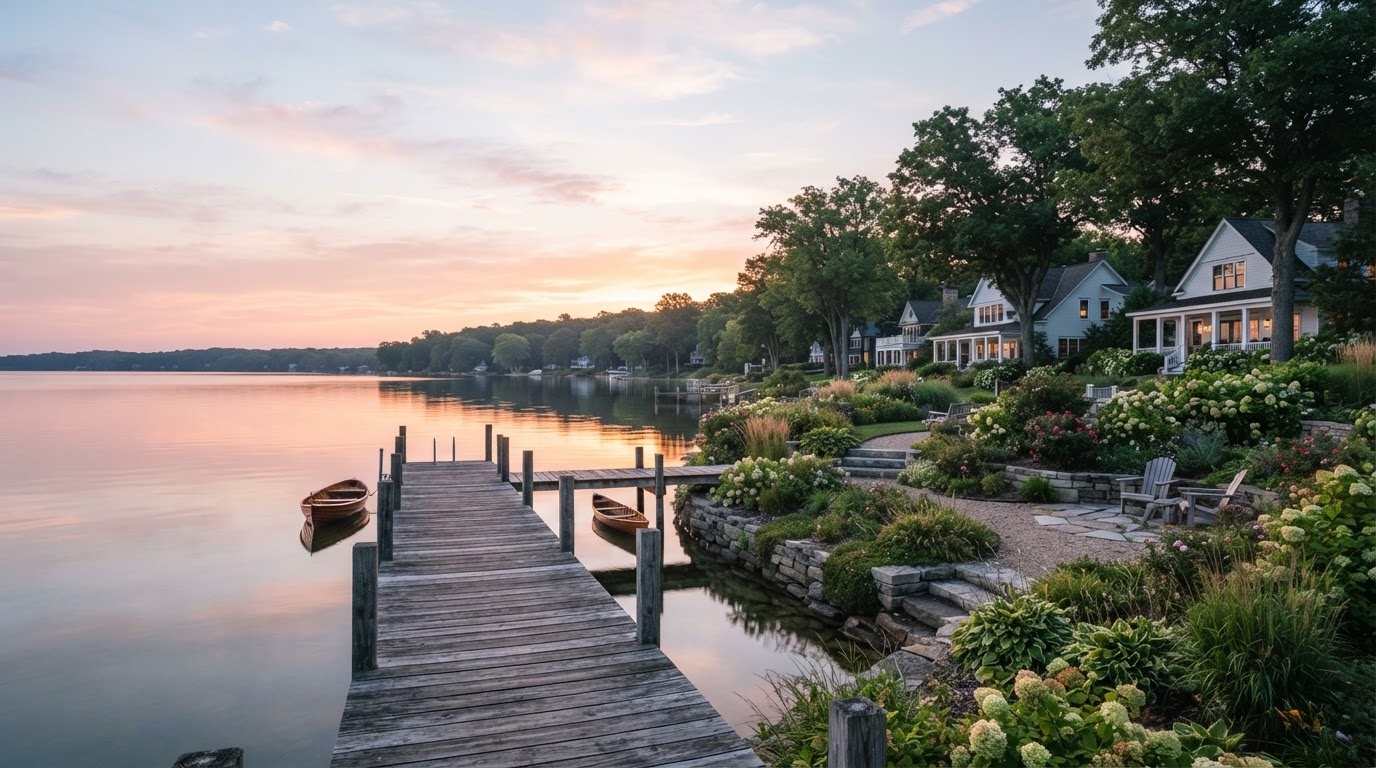
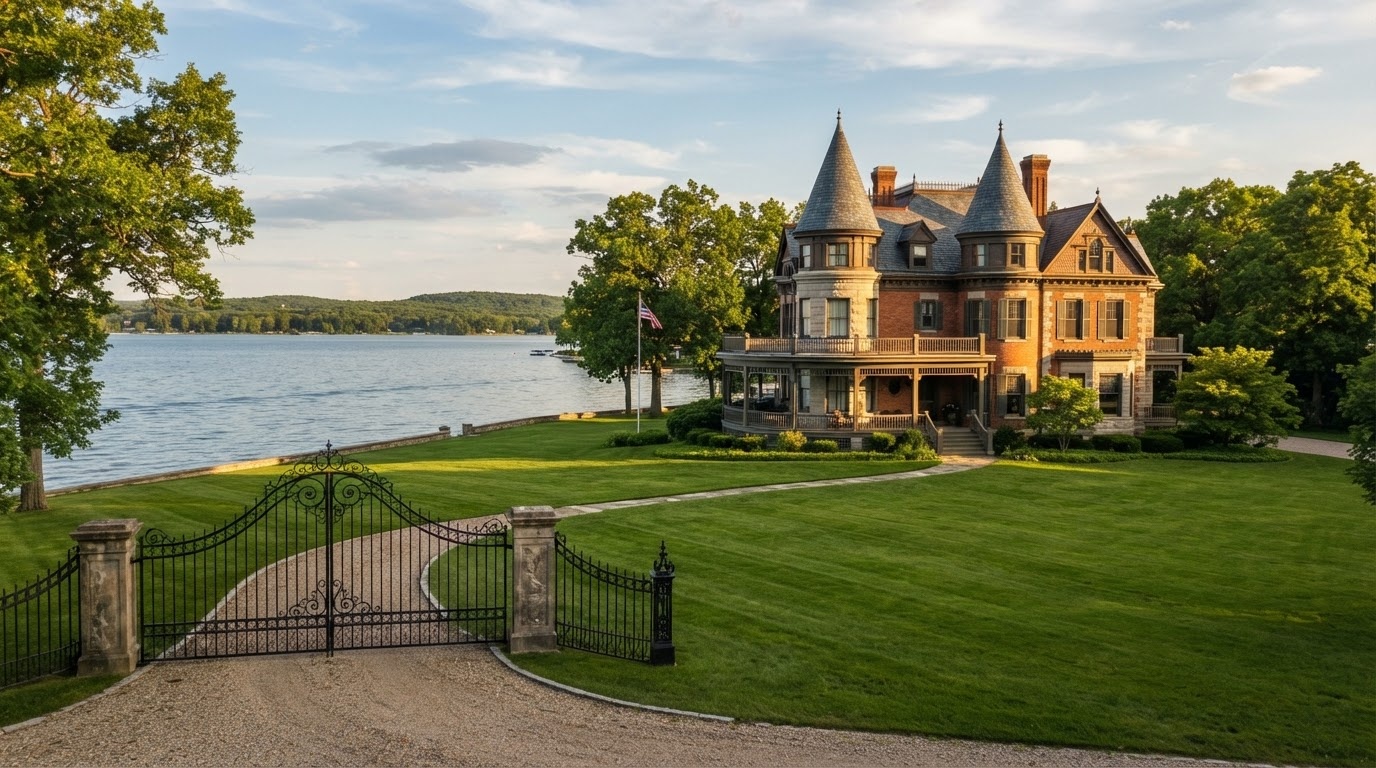
After the Great Chicago Fire of 1871, wealthy Chicago families built summer estates along this shoreline, and the mansions kept coming through the 1920s — Richardsonian Romanesque, Tudor, Spanish Colonial, and one house with a ballroom built over a boathouse. What makes Lake Geneva rare is that the shoreline path has remained public. An 1883 court ruling established a right of way around the entire 34 km circumference, so anyone can walk past some of the most valuable private property in the Midwest.
The path passes through gardens, under boathouses and along stone retaining walls. It is the single best reason to come.
What to do
Walk part of the shoreline path
Nobody walks all 34 km in a day. The best sections are the western shore from the town beach south toward Williams Bay, and the north shore near the country club. Start early — the path crosses private grounds and the etiquette is to keep moving and stay on the path.
The mailboat tour
A boat that delivers post to lakeside piers each summer morning, with a guide narrating the houses as it goes. It is a working boat rather than a tour, which is exactly why it is good. One crew member jumps to each pier and back as the boat keeps moving. Runs June to mid-September; book ahead.
Boating and the harbour
Rent a pontoon, a kayak or a paddleboard from the town side of the lake. The harbour at the foot of Broad Street has a small beach, a pier and the best view back toward the town.
The mansions from the water
Several companies run short sightseeing cruises from the harbour that cover the estates in an hour. Cheaper and drier than a private rental, and the narration is usually better than the guidebook.
Downtown and the resort strip
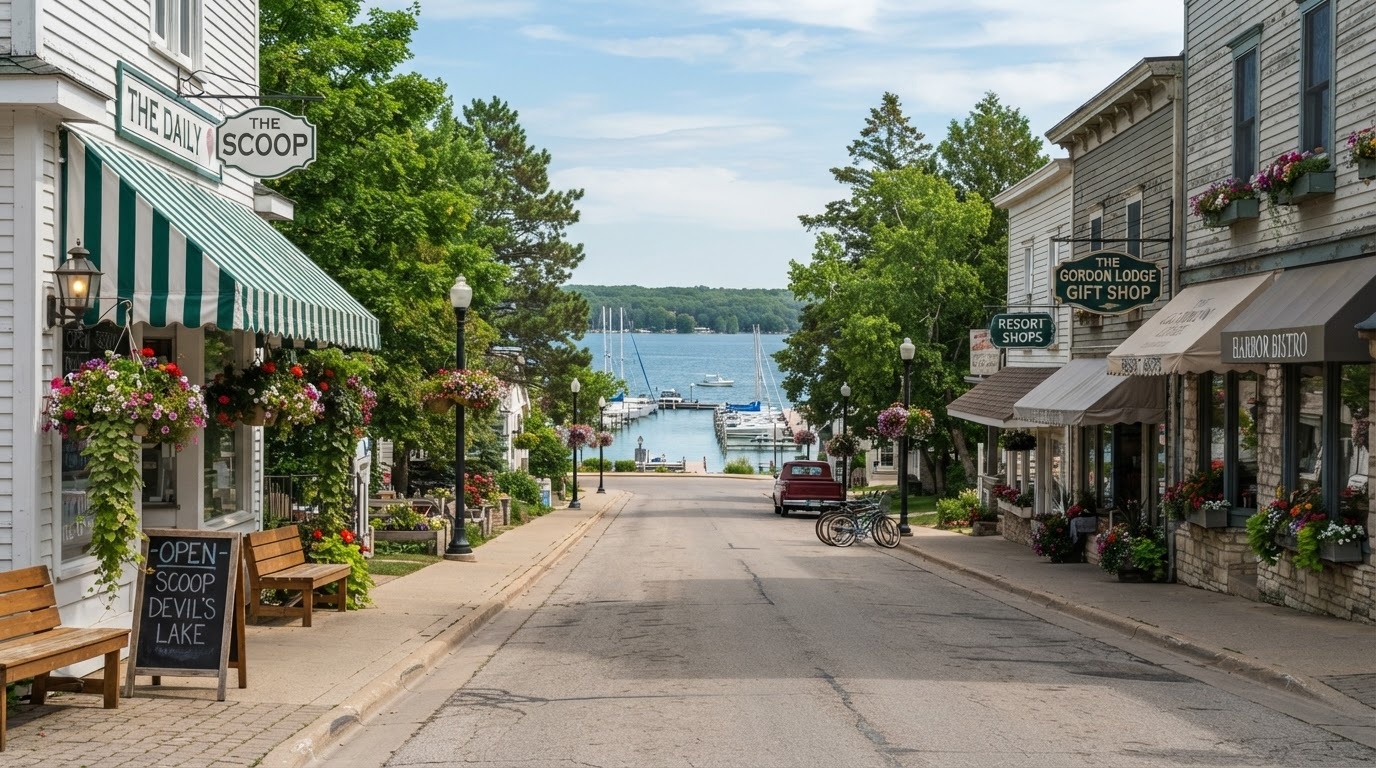
The main street is small, walkable and unashamedly aimed at visitors: ice cream, fudge, boutiques and a handful of restaurants. Behind it, the resort hotels date from the same era as the mansions and still keep the old style of service — dress for dinner.
Winter on the lake
The lake occasionally freezes hard enough for ice fishing and, in some years, an ice-boating regatta. The town runs a winter festival in February. Do not walk out on the ice without checking with local authorities — springs make thickness unpredictable.
Where to stay
- In town — walkable to the harbour and the main street, and the resorts carry most of the historic character.
- Williams Bay and Fontana — at the other end of the lake, quieter and often cheaper, still on the shoreline path.
- Delavan and Elkhorn — 15 minutes away, much cheaper, with a small circus heritage museum in Delavan.
- Camping — Big Foot Beach State Park, right on the lake, is the budget option and books out early.
Getting there
- From Chicago: 90 minutes, which is why the town is busy every summer weekend.
- From Milwaukee: 84 km, about an hour.
- From Madison: 1 hour 20 south-east.
- By air: Milwaukee or Chicago O'Hare, both under two hours by car.
When to go
Late May to early September for the water and the boat tours. September and early October for the path without the crowds and colour on the wooded shore. Winter for the festival and the quiet — much of the town closes in January and February.
Nearby
- Kettle Moraine State Forest — 40 minutes north, glacial terrain and the Ice Age Trail.
- Milwaukee — an hour, for the lakefront and the museums.
- Racine — 45 minutes east, with a Frank Lloyd Wright house and a good small art museum.
For the state-level view, see Places to Go; for the city, Milwaukee.
In pictures
Estates, boardwalks and lamps

An hour north
Milwaukee's lakefront, museums and breweries make the obvious pairing — and the airport is on the way home.