Theme guide
Culture & architecture
Frank Lloyd Wright was born in Richland Center and built his home, school and a good deal of his reputation in this state. There is also a lakefront museum that is a sculpture in its own right, and a thousand years of mound-building culture before either.
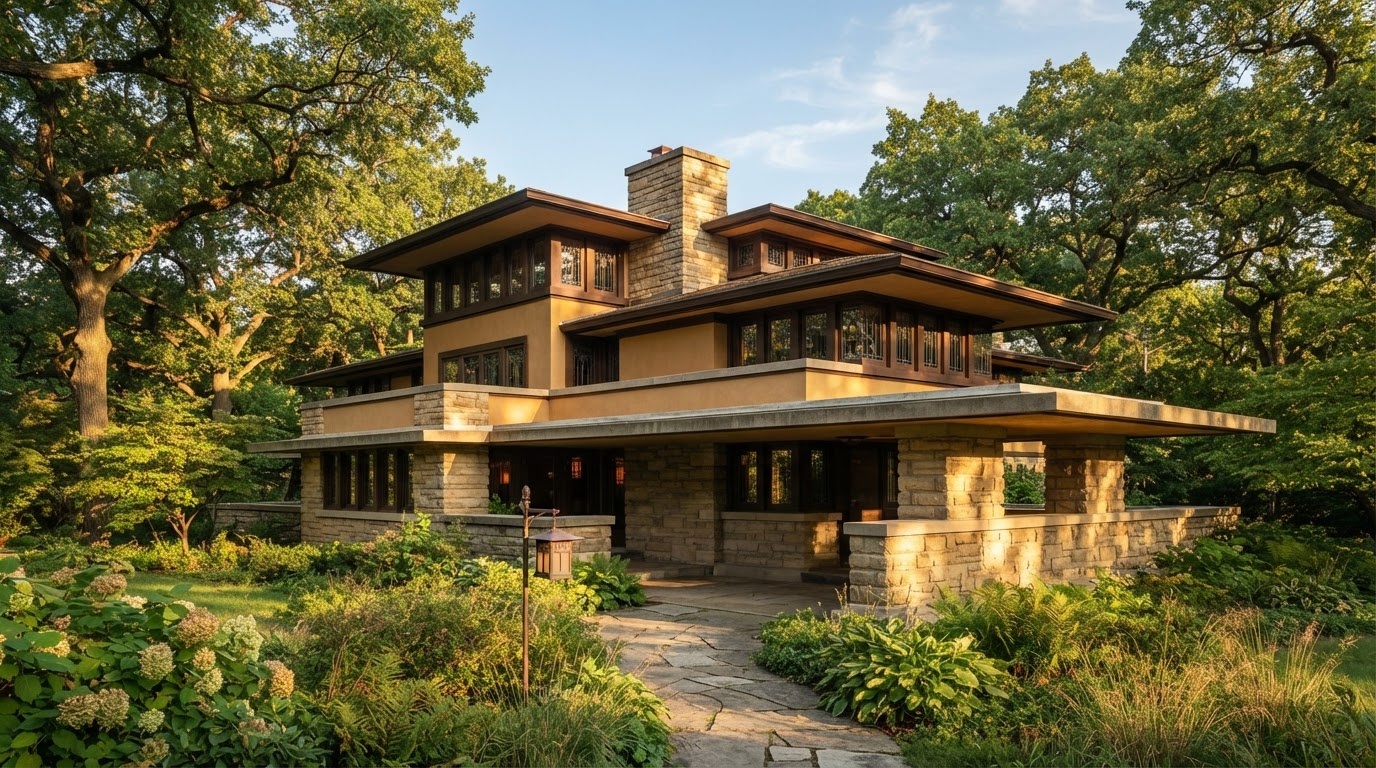
Frank Lloyd Wright
Wright spent his childhood summers on his family's land in the Wyoming Valley and returned in 1911 to build Taliesin on the ridge above the Wisconsin River. He rebuilt it twice after fires, lived in it until his death in 1959, and turned the surrounding hillside into a working school of architecture that still operates.
Taliesin, Spring Green
The house tour is the one to take: two hours through the living room, the drafting studio and the gardens, with a guide who knows the difference between what Wright designed and what he changed later. The estate tour adds the hillside cemetery and the Romeo and Juliet windmill. Book online; group sizes are capped and spring weekends sell out.
The architecture trail
More than 40 Wright-designed buildings survive in Wisconsin. The main cluster runs south-west from Madison through Spring Green and Richland Center, with the SC Johnson headquarters in Racine at the other end of the state — a 1939 administration building with dendriform columns that is generally considered his finest work for a corporate client.
- Taliesin — Spring Green, 60 km west of Madison.
- Wingspread — Racine, his largest Prairie house, now a conference centre with public tours.
- SC Johnson Research Tower and Administration Building — Racine, tours by reservation.
- Monona Terrace — Madison, his 1938 convention centre design, finally built in 1997.
- Wyoming Valley School and the Hillside School — near Spring Green, both still in use.
- House clusters — several scattered prairie houses around Madison, Wausau and Lake Geneva.
Also look at
Wright's Wisconsin has company. The German-influenced stone and brick buildings of the river towns, the breweries of Milwaukee, the copper-clad courts of the Fox Valley and the 19th-century commercial blocks of La Crosse and Mineral Point are all worth the detour.
Museums worth planning a day around
Milwaukee Art Museum
The Quadracci Pavilion, with its moveable brise soleil, is the most photographed building in the state. The collection runs from 19th-century German painting to a substantial folk and self-taught collection. Allow two to three hours. See the Milwaukee guide.
Chazen Museum of Art, Madison
Free, on the UW campus, and far stronger than a regional university museum has any right to be — particularly in modern and contemporary works on paper. See the universities guide.
Milwaukee Public Museum and Harley-Davidson Museum
The public museum is a classic 19th-century-style natural history museum with a European village replica; the Harley-Davidson museum is a purpose-built industrial space with a century of motorcycles. Both are good rainy-day options.
Beloit College's Logan Museum
An unexpected anthropology museum in a small border city, with world-class archaeological holdings. Free entry.
Native American heritage
Wisconsin holds one of the largest concentrations of effigy mounds in North America — earthen shapes built between roughly 700 and 1200 CE, in the forms of birds, bears, and long lines and cones. They are protected cultural sites, and they should be treated as such.
- Aztalan State Park — the remains of a pre-contact walled settlement on the Crawfish River, with platform and conical mounds. Explore on foot; the interpretive signs are good.
- Lizard Mound County Park — 28 effigy mounds in a county park north of Milwaukee, with boardwalks that keep visitors off the mounds.
- Devil's Lake — the park has a group of effigy mounds along the south shore, including bird and bear forms.
- Pendarvis, Mineral Point — Cornish miners' cottages from the 1830s, restored and open to tour. The town has become a craft and gallery centre.
The state's 11 federally recognised tribal nations run cultural centres, museums and casinos across the north and west. They are not tourist attractions but several do run public programming, and the Wisconsin Historical Society keeps a current list of hours.
Small towns with real character
| Town | Why |
|---|---|
| Mineral Point | Cornish lead-mining town on a very steep hill, now a craft centre |
| Spring Green | Taliesin, plus a drive-in cinema and a river to canoe |
| New Glarus | Swiss-founded village with a brewery that never leaves the state |
| Stoughton | Norwegian heritage and a long main street of Victorian shopfronts |
| Cedarburg | A mill town north of Milwaukee, with a river walk and historic district |
| Prairie du Chien | The oldest European settlement in the state, at the confluence of two rivers |
| Alma | Built up a bluff so steep the main street is a switchback |
Planning a culture trip
Two days: Milwaukee museum and the Third Ward, then an hour west for the Madison campus and the Capitol. Four days: add the Taliesin tour at Spring Green and a drive to Mineral Point. The itineraries hub has these options written out day by day.
Most of these places are closed on Mondays and require booking. Check hours before travelling, especially outside summer.
In pictures
Glass, earth and brick
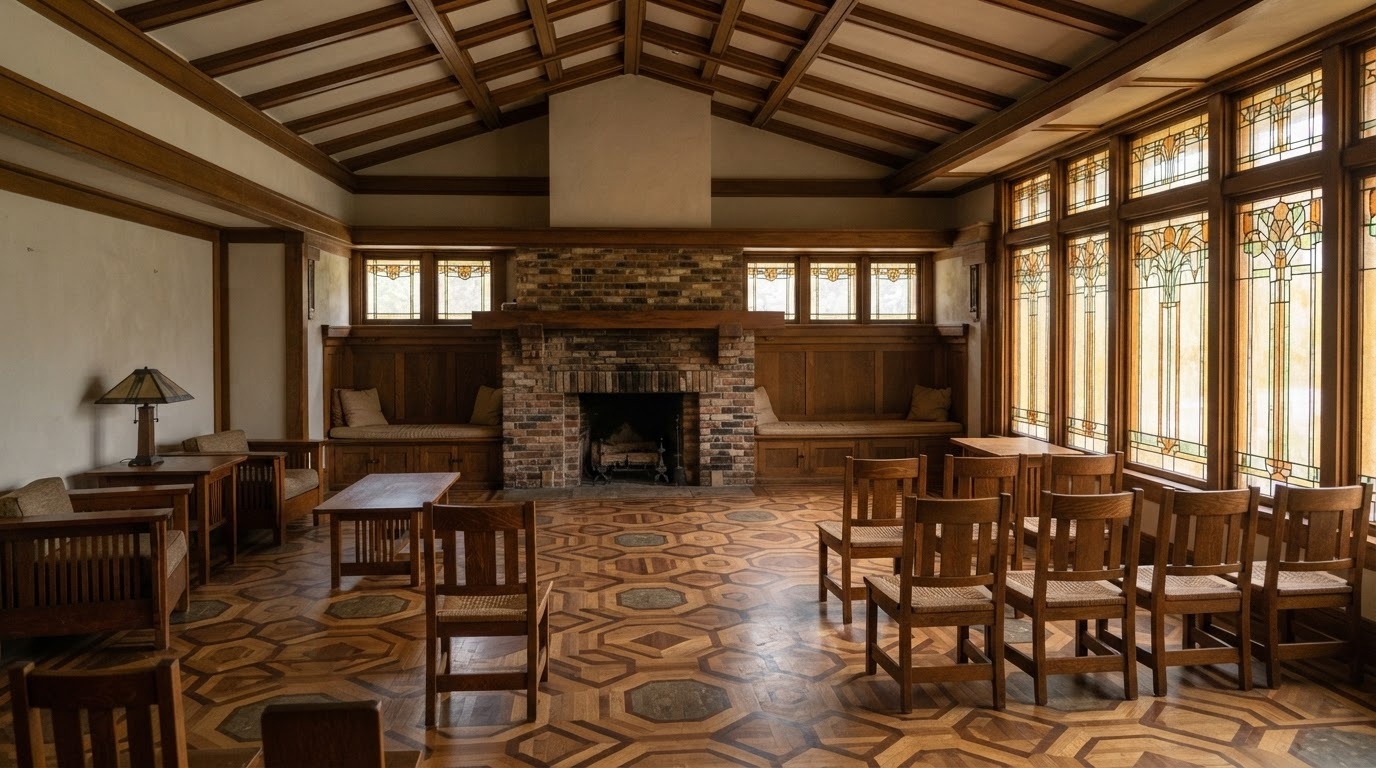
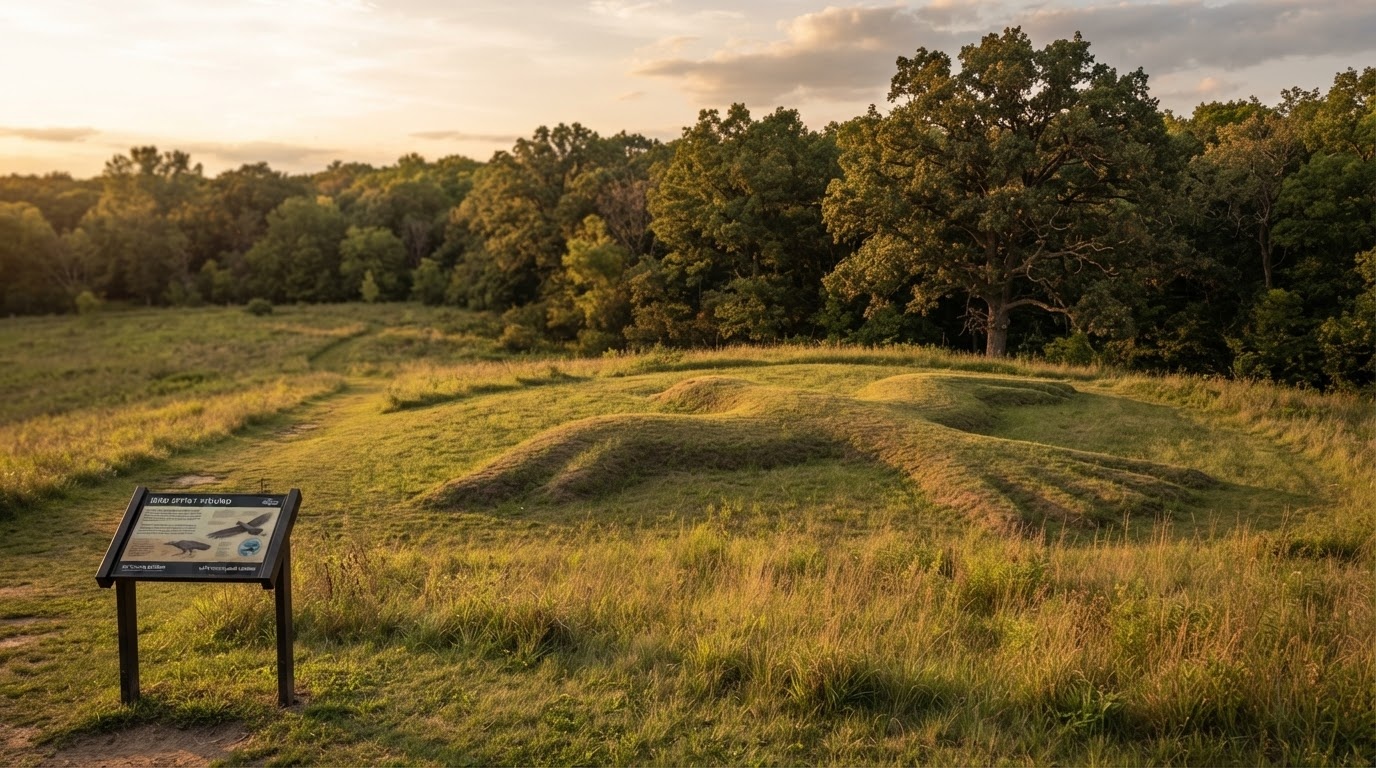
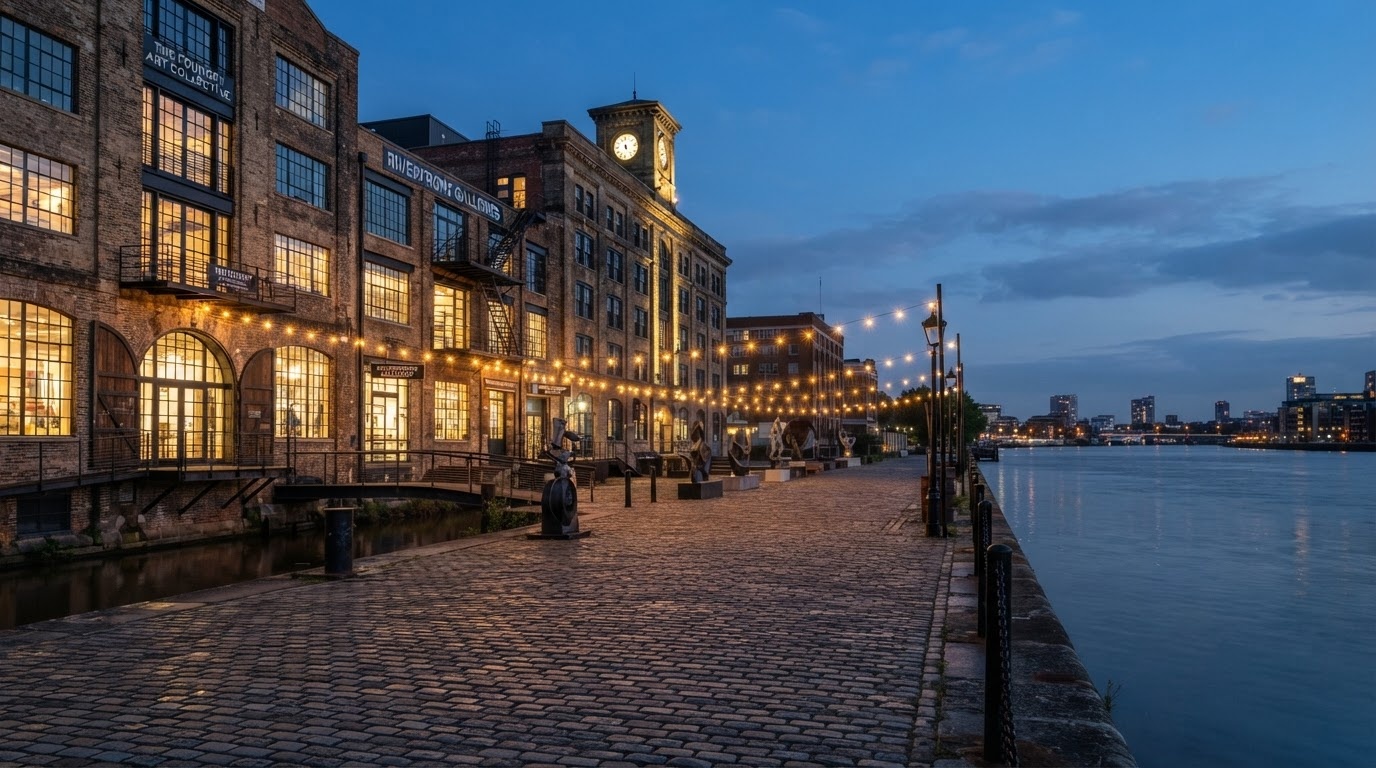
Pair it with the city
Most of these buildings are within a walk of a good restaurant. Milwaukee has the densest concentration; Madison has the best setting.